
Micronesian Megapode
Share This
Sasangat: An endangered species
Scientific Name: Megapodius laperouse (Family MEGAPODIDAE)
Common Name: megapode, incubator bird
CHamoru/Chamorro Name: Sasangat
Habitat and Natural History: The megapode lives in limestone forests and coconut groves. Eggs are not tended by the parents but incubated in mounds of decaying vegetation or in volcanic ash which generate heat. The young are able to run and fly immediately upon hatching. They are omnivorous, feeding on insects, crabs, and plant material.
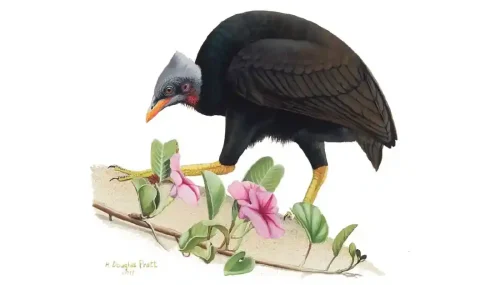
Description: A chicken like bird about 15 inches ( 38 centimeters) tall. It flies well. The body is brownish-black with a grayish crest. The large feet are yellow. The bill is yellow with red skin showing through the feathers at its base. Unlike a chicken, the tail is short. Males and females look the same.
Range: Palau; Guam; Northern Mariana islands
Current Status: The megapode is endangered in the Mariana Island chain. In Guam and Rota, its numbers have declined in the 19th and 20th centuries. There have been several sightings on Rota, including inside the protected Wedding Cake mountain conservation site. Remnant populations are believed to be on Aguigan and are occasionally observed on Tinian in the Northern Marianas. A small number of birds are present on Saipan. There is also recorded presence of this species on Anatahan, Sarigan, Alamagan, Farallon de Medinilla, and Pagan. There are also chicks on Aguiguan.
Threats: The main threats are habitat destruction, over hunting and predation by pigs, rats, cats and hilitai (monitor lizards). Another threat is volcanism which produces ash that covers nesting and foraging areas.