
Ancient Guam Era
Matatnga: Fearless
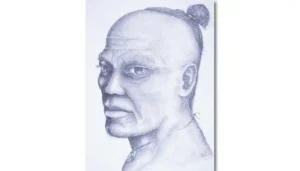
Matatnga is defined as “strong personality or fearless.” Chief Hurao, a CHamoru leader during the Spanish-CHamoru wars in the late 1600s, was the living embodiment
Matatnga is defined as “strong personality or fearless.” Chief Hurao, a CHamoru leader during the Spanish-CHamoru wars in the late 1600s, was the living embodiment
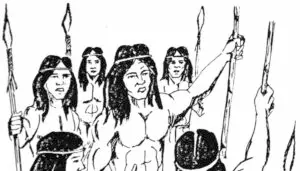
The CHamoru expression inafa’ maolek (making it good for each other) expresses a core CHamoru value. A life of harmony is taken to be the

Taotaomo’na, the people of before, refers to ancestral spirits that inhabited the earth along with the living. Ancient Chamorros/CHamorus believed the world around them was
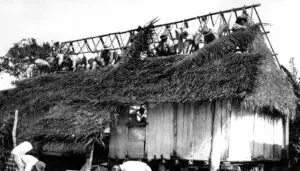
Interpretive essay: Striving for harmony is the foundation to CHamoru culture. The phrase inafa’ maolek (pronounced e-na-fah mao-lek) describes the CHamoru concept of restoring harmony

Nina (patlina) and Ninu (patlino) , meaning godmother and godfather in the Mariana Islands, respectively, are borrowed terms from the Spanish padrina and padrino. These
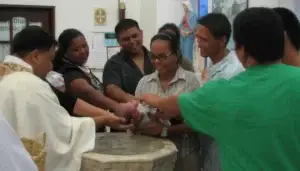
Kumpaire or pari’ is a religious and social term used to describe the relationship between parents and their child’s godfather. The word kumparie was borrowed
Kumaire, is religious and social term to describe the relationship between parents and their child’s godmother, borrowed from the Spanish comadre and appropriated into CHamoru

Ma uritao, an ancient CHamoru term used before Christianity was introduced to the CHamoru people, describes young unmarried women who resided at the Guma’ uritao
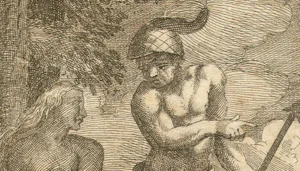
When Chamorro/CHamoru males reached puberty during ancient times, they were sent to live at the Guma’ Uritao, a house for bachelors. The bachelors would live
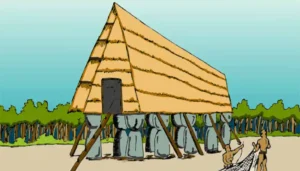
I mangguma’ uritao, men’s houses, were houses for young CHamoru men in the Mariana Islands from ancient times until the late 1600s (‘I’ means ‘the’;