
Chamorro Culture
Marriage Traditions
In ancient CHamoru society, the clan leaders arranged marriages. Women did not marry men in their clan since marriage was a chance to improve clan
In ancient CHamoru society, the clan leaders arranged marriages. Women did not marry men in their clan since marriage was a chance to improve clan
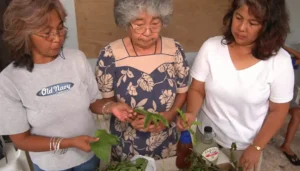
The pattera (nurse midwife) and suruhånu (traditional doctor) played important roles, especially when it came to pre-birth-to-birth events in the family. They assumed the roles
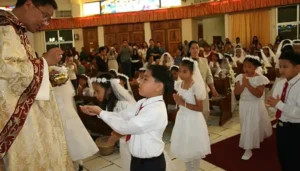
Church rites. Primera Kumuñon (First Holy Communion) and Komfetmasion (Confirmation) are church rites that have become CHamoru traditions among Catholics.

The Mariana Islands has a history of pottery-making that is more than 3,500 years long. The first people to arrive in the Mariana Islands apparently
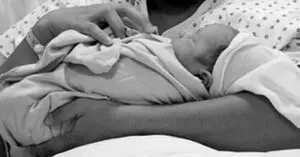
The birth of a child is the most important family event in CHamoru society. It marks the beginning of family celebrations and obligations that define

In the past, picking a name for the child was a family affair. In the early matrilineal CHamoru society, the name of a newborn child
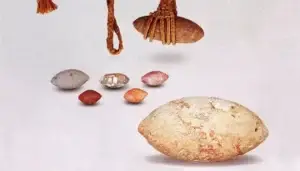
The signature weapon of the ancient Chamorro/CHamoru warrior, slingstones of various sizes were sharpened at both ends and hurled from a sling with deadly force
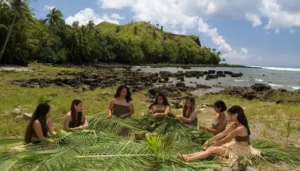
The coconut, called niyok in Chamorro/CHamoru and cocos nucifera scientifically, is undoubtedly one of the most important native plant foods in the Mariana Islands. Chief

Interpretive essay: No evidence of CHamoru tattoo from ancient times. Tattoo is often thought to have been a universal cultural practice in the Pacific islands.
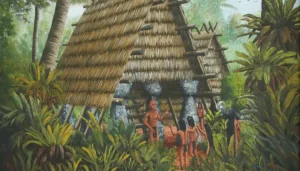
The latte is a manmade construct carved from limestone or basalt that was used as a foundation for a shelter against the elements or as