
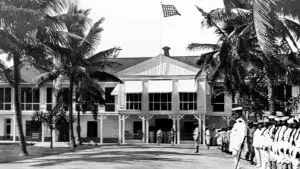
Civic Society
CHamorus/Chamorros: A People Divided
The people of the Mariana Islands archipelago, collectively known as CHamorus, call as their homeland an area in the Pacific comprising 15 islands with a
The people of the Mariana Islands archipelago, collectively known as CHamorus, call as their homeland an area in the Pacific comprising 15 islands with a
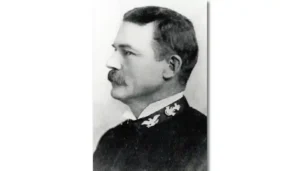
Captain Henry Glass (1844–1908), a rear admiral in the United States Navy, is remembered in Guam for his role in the bloodless capture of the
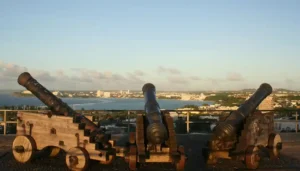
On 10 October 1792, Muro received an appointment as governor of the Marianas. He set sail again from Estella via the Cape of Good Hope
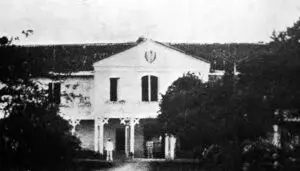
The last Spanish-appointed Governor of the Mariana Islands, Juan Marina Vega (1846 – 1909), more commonly known as Juan Marina, served his term on Guam
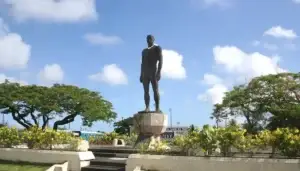
Kepuha (also spelled Quipuha) was a maga’låhi from Hagåtña, whose role in welcoming Spanish missionaries to Guam makes him a controversial figure in the island’s
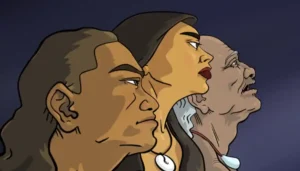
Manma’gas is the Chamorro/CHamoru word for leaders when referred to as a group. In ancient Guam, CHamoru leaders were usually the oldest members of clans

The Matua controlled the most resources and lands and were the most politically powerful class. Historical accounts give us a clear image of their place
A maga’låhi was the first born, high ranking (matua) male head of a CHamoru clan, a role inherited through his maternal lineage. Manmaga’låhi and manmaga’håga
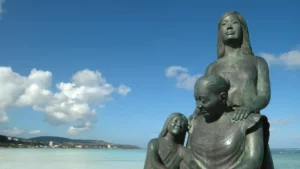
A maga’håga was the first born, high ranking (of the matua caste) female head of a CHamoru clan, a role inherited through her maternal lineage.
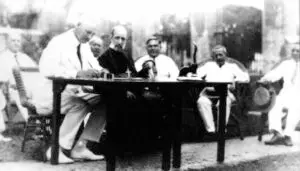
A common political fallacy is that democracy was a babe born in Guam during the mid-20th century under American rule. The fact is that democracy